
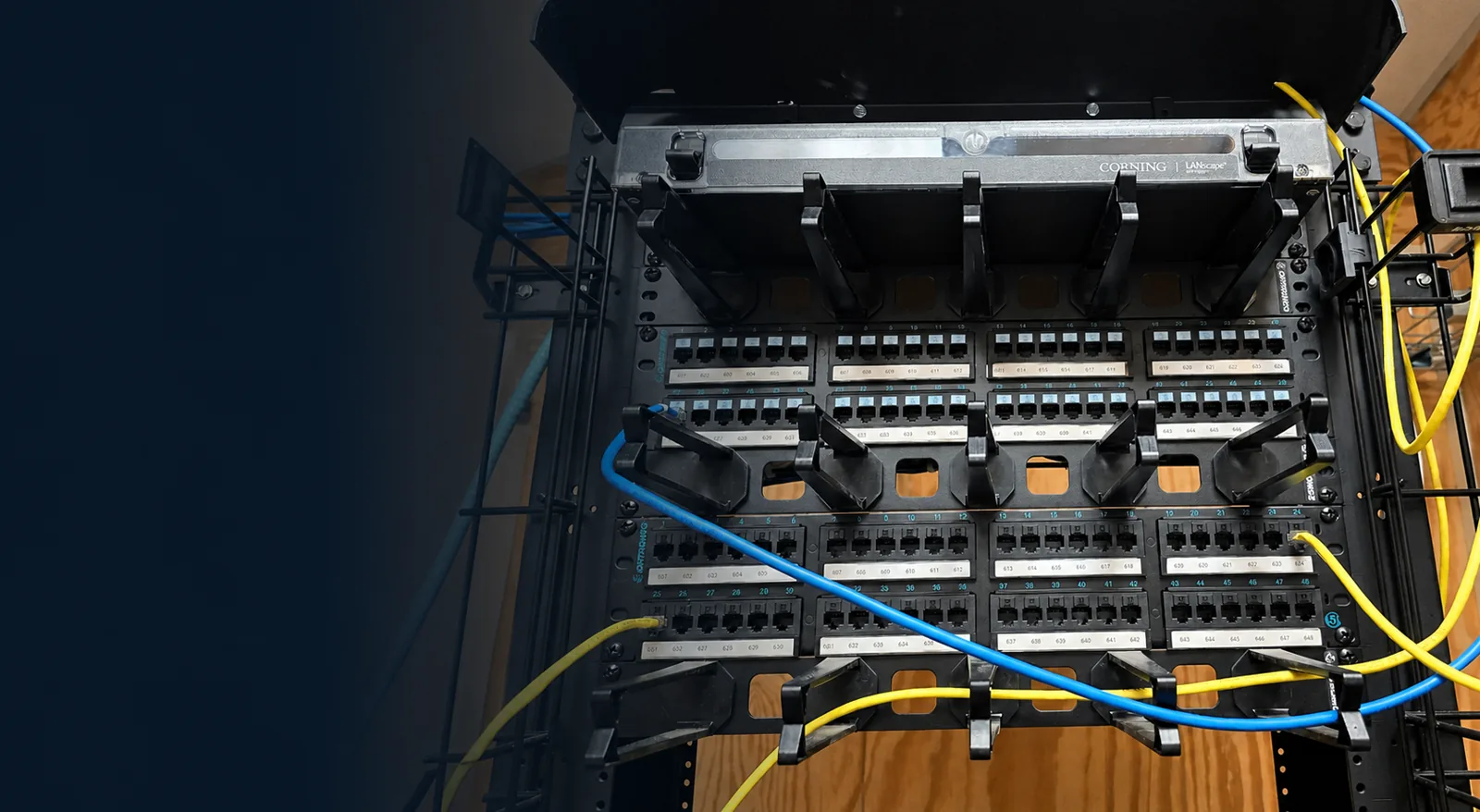
Data Cabling Types for Nashville Businesses: Copper, Fiber and Coax
Data cabling connects workplace computers, phones, servers, wireless access points, security equipment and other networked devices. The appropriate cable type depends on distance, equipment, environment and future plans.
What is data cabling?
Data cabling provides physical connections between network equipment and connected devices. Organized pathways, labeling and cable management help keep those connections easier to identify and maintain.
Cat6 and Cat6a cabling
Cat6 and Cat6a are copper cabling options commonly used for office networks, workstations, phones, printers and wireless access points. Project requirements help determine which category is appropriate.
Fiber optic cabling
Fiber optic cabling uses light to carry data and can support longer network links with less susceptibility to electromagnetic interference than copper. It may be suitable for building connections, network backbones and demanding environments.
Coaxial cabling
Coaxial cable remains useful for certain camera systems and legacy equipment. An assessment can determine whether existing coax should remain, be extended or be replaced.
Where businesses use data cabling
- Office computers, phones, printers and wireless access points
- Retail point-of-sale devices and customer Wi-Fi equipment
- Security cameras and door access control systems
- Warehouse and manufacturing network connections
- Server rooms, network closets and building links
How to choose between copper and fiber
Copper is commonly used for connections to individual devices. Fiber may be appropriate for longer links, building backbones or locations affected by electrical interference. A site assessment should account for distance, network equipment, pathways and expected growth.
What a cabling project should cover
- Site review and requirements assessment
- Cable type and pathway planning
- Installation, termination and labeling
- Connection testing
- Final review and future expansion planning
Data cabling questions
How do I know whether my business needs new cabling?
Slow connections, recurring disconnects, hard-to-trace wiring or a planned expansion are good reasons to evaluate the current system.
Is copper or fiber better?
The right choice depends on distance, connected equipment, environment and network requirements. Some projects use both.
Can existing cabling be inspected?
Yes. An inspection can identify installed cable types, organization, condition and suitability for current requirements.
Plan your Nashville data cabling project
Share the building, device count and network requirements for a tailored review.
Request a Quote