
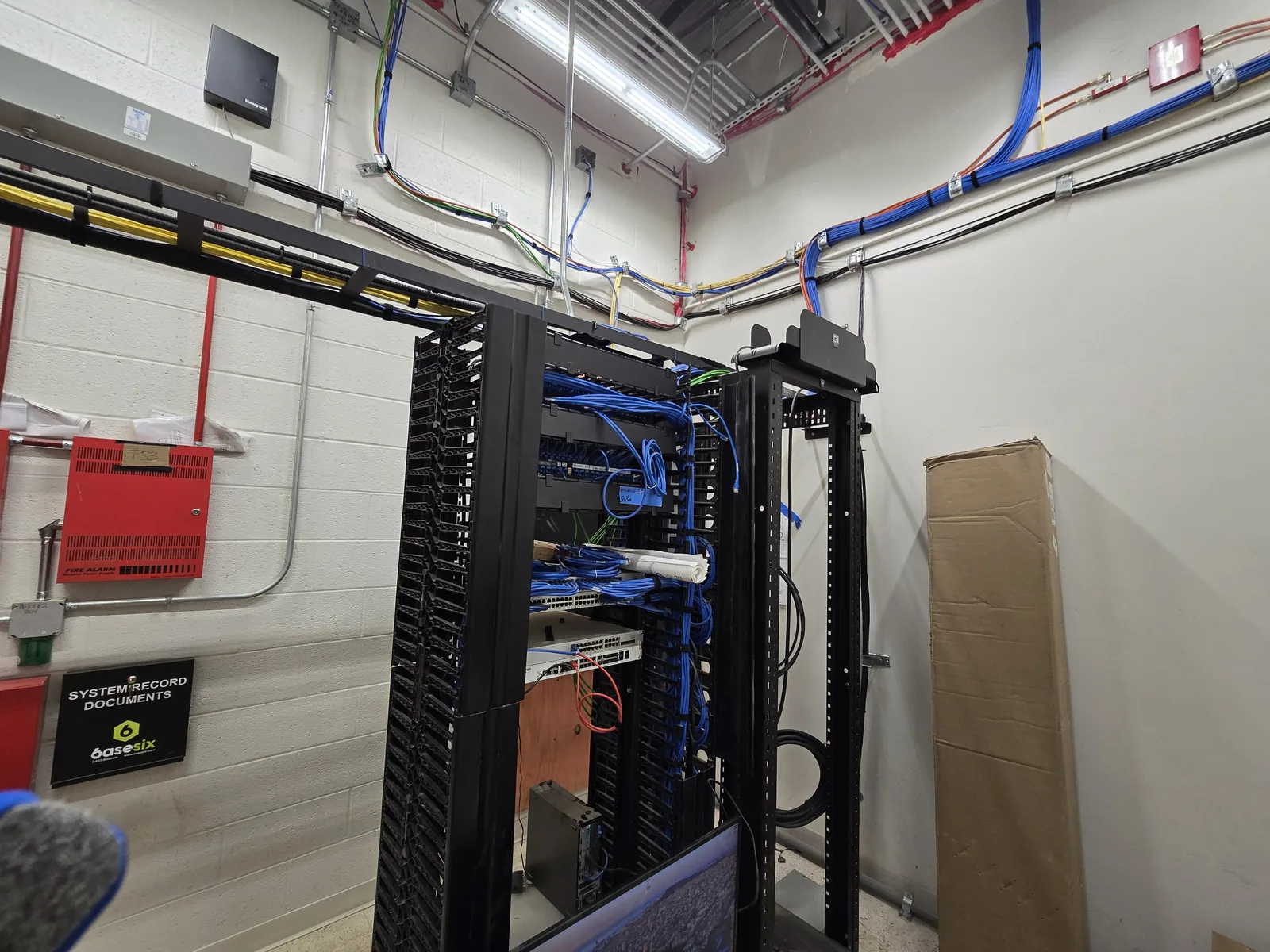
Structured Cabling vs. Network Cabling: What’s the Difference?
Understand how structured cabling creates the framework for your business network while network cabling connects the devices that keep it running.
A reliable business network starts with the right infrastructure, but many people use the terms structured cabling and network cabling interchangeably. Although they’re closely related, they don’t describe the same thing. Understanding the difference can help you make better decisions when planning a new office, expanding your facility, or upgrading your existing network.
Structured cabling provides the organized framework that supports your entire communication system, while network cabling connects the devices that keep your business running every day. Together, they create a dependable network, but each serves a different purpose.
This guide explains the difference between structured cabling and network cabling, how each works, and which solution best fits your business needs.
What Is Structured Cabling?
Structured cabling is a standardized cabling system that creates an organized foundation for your business’s communication infrastructure. Instead of installing separate cables for every new device or application, structured cabling brings everything together through a planned framework that supports data, voice, video, security systems, and wireless networks.
A structured cabling system typically consists of horizontal cabling, backbone cabling, patch panels, network racks, telecommunications rooms, and cable pathways. Each component works together to create a network that’s easier to manage, troubleshoot, and expand as business requirements change.
One of the biggest advantages of structured cabling is flexibility. As your business grows, you can add workstations, wireless access points, IP phones, security cameras, or other connected devices without rebuilding your entire network. The organized layout also reduces cable clutter, improves airflow around network equipment, and makes future maintenance much more efficient.
Businesses often choose structured cabling for:
- Office buildings with multiple departments
- Warehouses and distribution centers
- Healthcare facilities
- Educational institutions
- Retail stores
- Manufacturing facilities
- Multi-floor commercial buildings
A professionally designed structured cabling system supports both current operations and future expansion, helping businesses avoid frequent rewiring projects while maintaining reliable network performance.
What Is Network Cabling?
Network cabling refers to the physical cables that connect devices within a network, allowing them to communicate and share data. Computers, printers, servers, switches, wireless access points, IP phones, and security cameras all rely on network cabling to exchange information quickly and reliably.
Unlike structured cabling, which provides the overall framework for an entire communication system, network cabling focuses on the individual connections that keep devices connected. These cables carry data between network equipment and end-user devices, making them an essential part of every business network.
The most common types of network cabling include:
- Cat5e for standard business networking
- Cat6 for higher data speeds and improved performance
- Cat6A for high-bandwidth applications and longer cable runs
- Fiber optic cabling for high-speed, long-distance connectivity between buildings or network rooms
Network cabling is commonly installed during office renovations, business expansions, equipment upgrades, or new commercial construction. A well-planned installation improves network reliability, reduces connectivity issues, and helps maintain consistent performance across the workplace.
While network cabling supports the devices your business uses every day, it performs best when installed as part of a structured cabling system. This creates an organized infrastructure that simplifies maintenance, supports future expansion, and helps your network operate more efficiently.
Structured Cabling vs. Network Cabling: Key Differences
Although the terms are often used interchangeably, structured cabling and network cabling serve different purposes. One creates the framework that supports your communication infrastructure, while the other provides the physical connections that allow devices to communicate. Understanding these differences makes it easier to choose the right solution for your business.
| Feature | Structured Cabling | Network Cabling |
|---|---|---|
| Purpose | Creates an organized infrastructure for voice, data, video, and security systems. | Connects individual devices to the network. |
| Scope | Covers the entire building or facility. | Focuses on specific device-to-device connections. |
| Components | Backbone cabling, horizontal cabling, patch panels, network racks, cable management, and outlets. | Ethernet cables, fiber optic cables, connectors, switches, and end devices. |
| Scalability | Designed to accommodate business growth and future technology upgrades. | New devices often require additional cable runs or modifications. |
| Maintenance | Organized layouts simplify troubleshooting, maintenance, and future changes. | Individual cable issues are easier to identify, but larger networks can become difficult to manage without proper organization. |
| Best For | Medium to large businesses, multi-floor offices, warehouses, healthcare facilities, schools, and commercial buildings. | Small office setups, equipment connections, and extending existing networks. |
Which Is the Better Choice?
The answer depends on your business requirements.
If you’re building a new office, relocating, renovating a commercial space, or planning for long-term growth, structured cabling provides a strong foundation that supports multiple technologies through a single, organized infrastructure. It reduces cable clutter, simplifies maintenance, and makes future expansion much easier.
If your goal is to connect a few devices, replace damaged cables, or add equipment to an existing network, network cabling may be all you need. It provides the physical connections that keep computers, printers, servers, wireless access points, and other devices communicating efficiently.
For most commercial environments, the strongest approach combines both. A professionally designed structured cabling system forms the backbone of the network, while network cabling delivers reliable connections to every device across the facility. This combination creates a network that’s easier to manage, more reliable, and better prepared for future growth.
Which One Does Your Business Need?
The right choice depends on your current infrastructure, business goals, and future plans. While network cabling and structured cabling work together, one may be a better fit depending on the size and complexity of your project.
Choose structured cabling if you:
- Are moving into a new commercial building
- Plan to add more employees, devices, or departments over time
- Need a centralized infrastructure for data, voice, surveillance, and wireless networks
- Want an organized cabling system that’s easier to maintain and expand
- Are renovating or building a facility from the ground up
Choose network cabling if you:
- Need to connect new workstations or network devices
- Are replacing damaged or outdated cables
- Want to expand an existing network without a complete infrastructure upgrade
- Need additional connections for printers, servers, IP phones, or wireless access points
- Require a targeted upgrade for a specific area of your facility
For many businesses, the best solution combines both. A structured cabling system provides the organized foundation, while network cabling connects the devices that keep your business running every day. This approach supports reliable performance, simplifies future upgrades, and helps reduce downtime as your technology needs evolve.
If you’re unsure which solution fits your facility, a professional site assessment can identify your current infrastructure, evaluate future requirements, and recommend the most effective approach for your business.
Choose the Right Cabling Solution for Your Business
The choice between structured cabling vs. network cabling depends on your business needs and future plans. While network cabling connects your devices, structured cabling provides an organized foundation that supports long-term growth and easier maintenance.
Wired Optics helps businesses design and install reliable network infrastructure built for performance, scalability, and everyday operations. Contact our team to find the right cabling solution for your facility.
Plan the Right Cabling System for Your Facility
Wired Optics designs and installs organized, scalable network infrastructure for commercial facilities across Tennessee and Kentucky.