
Guide to Fiber Optic Installation for Businesses
Learn how professional fiber optic installation improves network speed, reliability, distance, and capacity for growing businesses.
Every business relies on fast, dependable connectivity. Cloud applications, video conferencing, large file transfers, security systems, and connected devices all place greater demands on network infrastructure than ever before. As bandwidth requirements continue to grow, many organizations are moving beyond traditional copper cabling and investing in fiber optics.
A well-planned fiber optic installation delivers the speed, reliability, and scalability businesses need for both current operations and future growth. It also provides the backbone for modern communication systems across offices, warehouses, healthcare facilities, educational institutions, and industrial sites.
This guide explains what fiber optic cabling is, why businesses choose it, and what to expect during a professional installation.
What Is Fiber Optic Cabling?
Fiber optic cabling uses thin strands of glass or plastic to transmit data as pulses of light instead of electrical signals. This technology allows information to travel at extremely high speeds while maintaining excellent signal quality over long distances.
Unlike traditional Ethernet cables, fiber optics experience very little signal loss. They also resist electromagnetic interference, making them an excellent solution for commercial environments with heavy electrical equipment or large facilities.
Businesses often use fiber optics to connect:
- Server rooms
- Network closets
- Office buildings
- Data centers
- Warehouses
- Security systems
- Wireless access points
- Manufacturing facilities
The result is a faster, more stable network that supports demanding business applications.
Why Businesses Choose Fiber Optic Installation
Network demands continue to increase as businesses adopt cloud platforms, remote collaboration tools, and connected devices. A professional business fiber optic installation offers several advantages over traditional cabling.
Faster Data Speeds
Fiber optic networks support extremely high bandwidth, making file transfers, cloud applications, and video communication much more efficient.
Greater Reliability
Because fiber uses light instead of electrical signals, performance remains consistent even across long cable runs.
Better Network Stability
Fiber optic cables resist electromagnetic interference that can affect copper cabling. This creates a more dependable connection throughout the building.
Room for Future Growth
Business technology continues to evolve. Fiber infrastructure supports higher bandwidth demands without requiring frequent upgrades.
Where Fiber Optic Cabling Works Best
Not every network requires fiber throughout the building. Many commercial environments use fiber in specific areas where high performance matters most.
Common applications include:
- Connections between network closets
- Building-to-building connectivity
- Data center infrastructure
- Internet service provider connections
- High-capacity server rooms
- Large office campuses
- Industrial facilities
- Multi-floor commercial buildings
Many businesses combine fiber optic cabling with traditional Ethernet cabling to create a balanced network that meets both performance and budget requirements.
What Happens During Fiber Optic Installation?
Professional fiber optic cable installation follows a structured process that ensures reliable network performance.
Site Evaluation
Technicians inspect the building layout, equipment locations, existing infrastructure, and future expansion plans. The goal is to determine the best cable routes while minimizing disruption to daily operations.
Network Design
Every connection receives careful planning before installation begins. Technicians determine:
- Cable pathways
- Fiber type
- Equipment locations
- Network cabinets
- Patch panels
- Termination points
Proper planning reduces installation challenges later in the project.
Cable Installation
Fiber cables are installed through ceilings, conduits, cable trays, or underground pathways depending on the building design. Professional installers protect the cables from excessive bending or physical damage during installation.
Termination and Testing
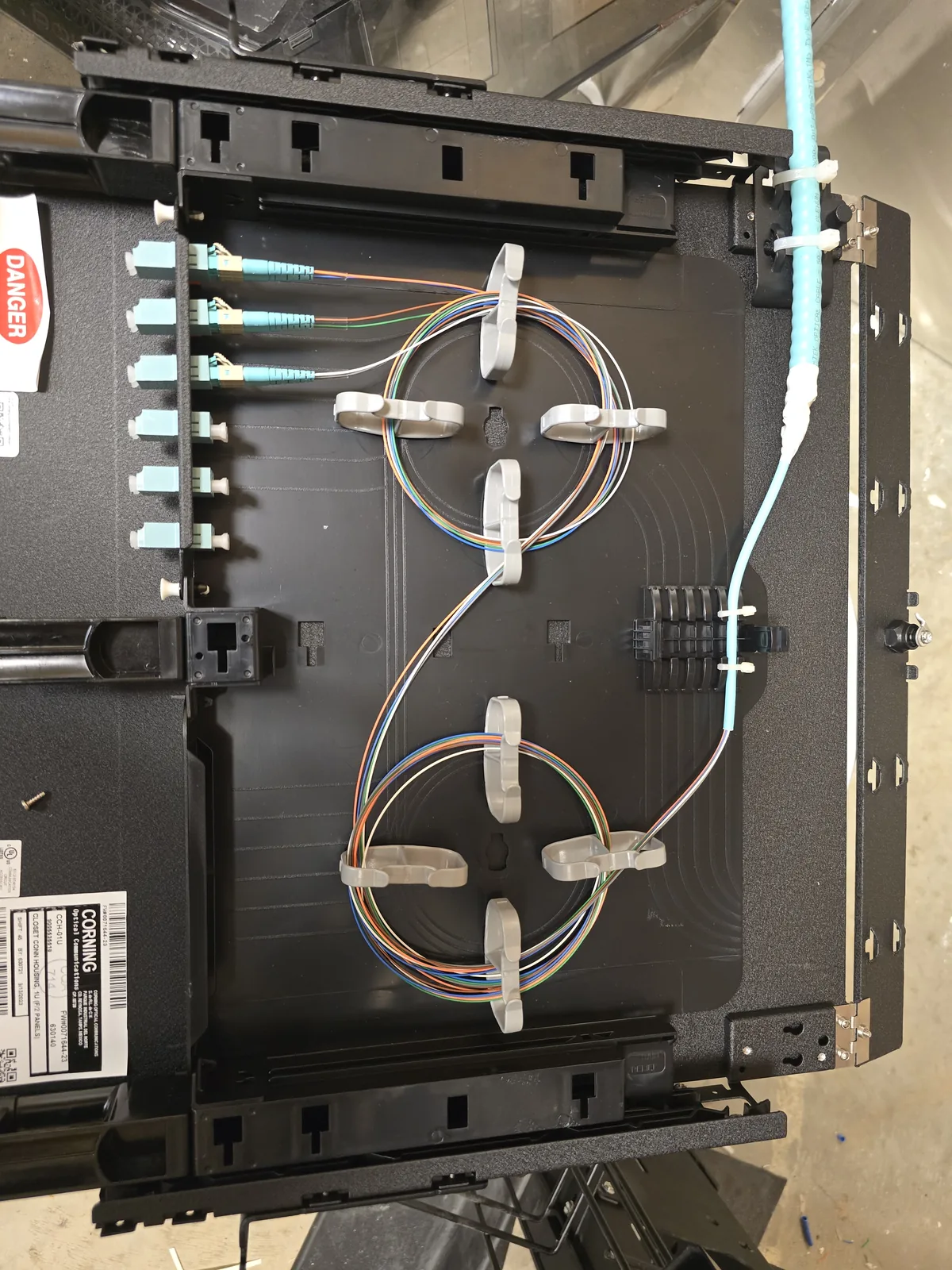
Each fiber strand is professionally terminated and thoroughly tested. Certification verifies that every connection delivers the required performance before the network becomes operational.
Commercial Fiber Optic Installation for Growing Businesses
Large commercial properties often require higher network capacity than traditional office environments. A professional commercial fiber optic installation supports businesses that rely on continuous connectivity across multiple departments, buildings, or facilities.
Industries that commonly benefit include:
- Healthcare
- Manufacturing
- Education
- Corporate offices
- Retail centers
- Distribution facilities
- Hospitality
- Government buildings
Fiber infrastructure allows these organizations to expand without replacing their core network every few years.
Choosing Professional Fiber Optic Services
Fiber installation requires specialized equipment, precise installation techniques, and experienced technicians. Professional fiber optic services include much more than cable installation.
A qualified contractor typically provides:
- Site assessments
- Network design
- Fiber cable installation
- Fiber splicing
- Cable termination
- Network testing
- Certification
- Documentation
- Maintenance support
Working with experienced professionals reduces installation errors while helping businesses maximize network performance.
Why Fiber Optic Network Installation Is a Long-Term Investment
Business technology continues to evolve. Higher internet speeds, cloud computing, artificial intelligence, security systems, and connected devices all require stronger network infrastructure.
A professionally completed fiber optic network installation provides the flexibility to support these future requirements without major infrastructure changes.
Although fiber installation often requires a larger initial investment than copper cabling, the long-term benefits frequently outweigh the upfront cost through improved reliability, higher performance, and reduced maintenance.
Fiber Optic Installation Services in Nashville and Clarksville
Businesses across Tennessee continue to invest in modern network infrastructure that supports long-term growth. Wired Optics provides professional fiber optic installation for commercial offices, healthcare facilities, warehouses, retail spaces, schools, and industrial properties.
Companies in the Nashville area can rely on experienced technicians for complete fiber optic network design and installation tailored to commercial environments. Businesses in Clarksville also benefit from dedicated fiber optic solutions that support expanding operations, higher bandwidth requirements, and dependable connectivity.
Every project begins with careful planning to ensure the network supports both current operations and future expansion.
Build a Faster Network With Wired Optics
Reliable connectivity begins with quality infrastructure. Professional fiber optic cabling creates a network that delivers higher speeds, greater reliability, and room for future growth.
Whether your business requires a complete fiber optic cable installation, an upgraded backbone network, or large-scale commercial fiber optic installation, Wired Optics delivers dependable fiber optic services designed around your business requirements.
A properly installed fiber network keeps your business connected while preparing your infrastructure for tomorrow’s technology.
Plan Your Fiber Optic Installation
Wired Optics designs, installs, terminates, tests, and certifies commercial fiber networks across Tennessee and Kentucky.