
Guide to Commercial Data Cabling for Businesses
Learn how organized commercial data cabling supports reliable networks, connected systems, easier maintenance, and future business growth.
A reliable network keeps every part of your business connected. Employees depend on fast internet to complete daily tasks, customers expect seamless service, and connected systems such as VoIP phones, security cameras, cloud platforms, and Wi-Fi all require dependable infrastructure. When the network struggles, productivity drops, communication slows, and downtime becomes expensive.
That is why commercial data cabling deserves careful planning. A structured cabling system creates a strong foundation for your entire IT network while making future upgrades much easier. Instead of dealing with messy cables, weak connections, and constant troubleshooting, businesses gain an organized system that delivers consistent performance.
This guide explains what is commercial data cabling, why it matters, how commercial data cabling installation works, and what businesses should consider before starting a new project.
What Is Commercial Data Cabling?
Many business owners ask, what is commercial data cabling?
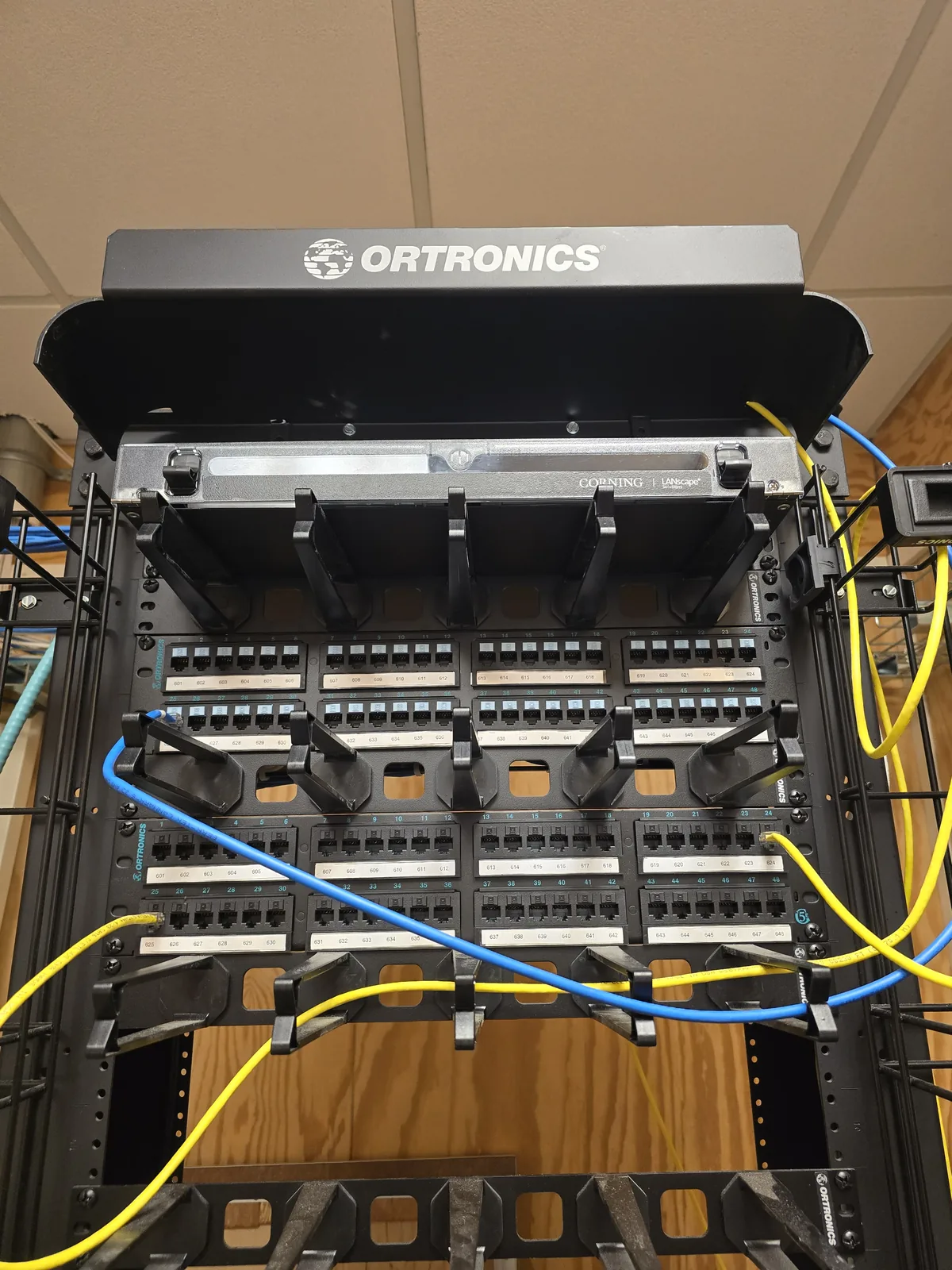
Commercial data cabling refers to the structured network of cables, patch panels, connectors, network racks, and outlets that carry data between computers, servers, internet equipment, wireless access points, security systems, and other connected devices inside a commercial building.
Unlike residential wiring, commercial cabling supports larger networks, higher traffic volumes, multiple users, and dozens or even hundreds of connected devices. Every cable serves a specific purpose, making the network easier to manage and maintain.
A properly planned system also allows businesses to expand without replacing their existing infrastructure every few years.
Why Commercial Data Cabling Matters
Your network supports far more than internet access. Nearly every business function depends on stable connectivity.
Employees access cloud applications throughout the day. Customers make purchases through connected payment systems. Security cameras record continuously. Teams communicate through video meetings and VoIP phones.
A poorly designed network creates unnecessary interruptions that affect both productivity and customer experience.
Professional business data cabling helps businesses achieve:
- Reliable network performance across every department
- Faster communication between connected devices
- Better support for cloud applications
- Stable VoIP phone performance
- Strong Wi-Fi coverage throughout the building
- Easier maintenance and troubleshooting
- Room for future business growth
Instead of adding new cables whenever additional equipment arrives, businesses receive a structured system that supports expansion without creating unnecessary complexity.
Common Systems Supported by Commercial Cabling
Modern commercial buildings rely on connected technology throughout the facility. A properly designed commercial data cabling installation creates one organized infrastructure that supports multiple business systems.
These commonly include:
- Employee workstations
- Desktop computers and laptops
- Wireless access points
- VoIP telephone systems
- Security cameras
- Access control systems
- Conference room equipment
- Point-of-sale terminals
- Servers and network switches
- Audio and video systems
- Building automation devices
- Smart office technology
Rather than operating independently, these systems communicate through one structured network that improves efficiency across the business.
Office Data Cabling Creates a More Organized Workplace
A growing business often adds employees, equipment, and office space over time. Without proper planning, network cables quickly become difficult to manage.
Professional office data cabling creates a clean, organized network where every workstation has reliable connectivity.
Each cable receives proper labeling, routing, and termination. This organization makes future maintenance much simpler because technicians can quickly identify every connection without tracing cables throughout the office.
A structured office network also allows businesses to:
- Add new workstations easily
- Rearrange office layouts
- Upgrade network equipment
- Install additional Wi-Fi access points
- Expand conference rooms
- Support future technology upgrades
An organized cabling system saves both time and money throughout the life of the building.
Choosing the Right Cabling for Your Business
Every business has different network requirements. The right solution depends on your building size, internet usage, connected devices, and future expansion plans.
Copper Ethernet cabling remains the standard choice for many businesses because it provides dependable performance while supporting everyday office applications.
Fiber optic cabling becomes the better option when businesses require:
- High-speed data transfer
- Longer cable distances
- Faster communication between network closets
- Better protection from electrical interference
- Greater bandwidth for future growth
Many businesses combine both solutions. Fiber optic cables connect network rooms or separate buildings, while copper cables serve individual workstations throughout the office.
An experienced installer evaluates your current needs while planning for future expansion instead of focusing only on immediate requirements.
What Happens During Commercial Data Cabling Installation?
Successful commercial data cabling installation follows a structured process that reduces disruption while delivering long-term reliability.
Initial Site Survey
Technicians inspect the building layout, equipment locations, internet service entry points, and existing infrastructure. They also identify future expansion opportunities before work begins.
Network Design
Every cable route receives careful planning. Network racks, patch panels, switches, and data outlets are positioned for efficient performance and easy maintenance.
Cable Installation
Technicians install cables through ceilings, walls, conduits, or cable trays while following industry standards for cable protection and organization.
Proper cable management reduces signal interference and improves airflow around network equipment.
Cable Termination
Each cable receives professional termination using quality connectors and patch panels.
Accurate termination helps maintain network performance while reducing future connection issues.
Labeling and Documentation
Every cable receives a clear label, making future maintenance much easier. Network documentation also helps IT teams identify connections quickly during upgrades or repairs.
Testing and Certification
Every cable undergoes testing before project completion. Certification confirms each connection meets performance standards and delivers reliable network speeds.
Businesses receive confidence that every network connection performs as expected before employees begin using the system.
Why Professional Data Cabling Services Make a Difference
Network performance depends on installation quality as much as cable quality.
Experienced data cabling services help businesses avoid many common problems that often appear after poorly planned installations.
Professional installation reduces the risk of:
- Loose cable connections
- Network slowdowns
- Signal interference
- Cable damage
- Difficult maintenance
- Unorganized wiring closets
- Limited expansion capacity
- Frequent troubleshooting
Certified installers also follow recognized industry standards that improve both safety and long-term reliability.
Although professional installation requires an initial investment, businesses often save money through lower maintenance costs and fewer network disruptions.
How to Choose the Right Commercial Cabling Partner
Not every contractor specializes in structured network infrastructure.
Before selecting a provider, consider a company that offers:
- Experience with commercial projects
- Structured cabling design expertise
- Certified installation practices
- Clear project documentation
- Cable testing and certification
- Support for future network expansion
- Transparent project planning
A knowledgeable contractor asks detailed questions about your current network and future business plans rather than recommending the same solution for every project.
Build a Network That Supports Future Growth
Every commercial property has different network requirements. A medical office has different connectivity needs than a warehouse, retail store, manufacturing facility, or corporate office. Wired Optics designs structured commercial data cabling systems that match each project’s layout, device count, and future expansion plans.
Businesses looking for commercial data cabling installation in Nashville can explore Wired Optics Nashville services for local solutions tailored to offices, warehouses, retail spaces, healthcare facilities, and other commercial properties.
Companies operating in Clarksville can also benefit from dedicated business data cabling and data cabling services in Clarksville designed for growing commercial environments, with support for structured cabling, fiber optics, wireless networks, server room buildouts, access control, and security infrastructure.
Plan Your Commercial Cabling Project
Wired Optics designs, installs, labels, tests, and certifies organized network cabling for commercial facilities across Tennessee and Kentucky.